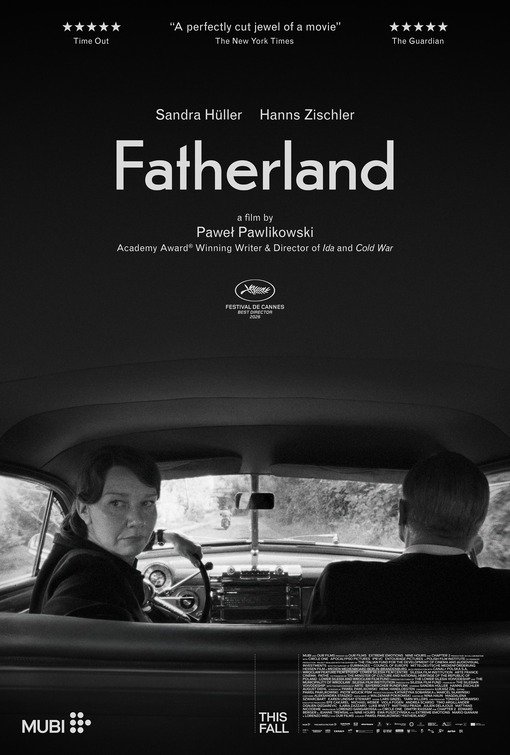
Nobel Prize winning writer, Thomas Mann left Germany in 1933 with the Nazi party rising to power. 16 years later, he returns to his homeland to receive a prize in Frankfurt and attend a ceremony in his honour in Weimar, east of the border.
In 1949, Germany is still devastated by the effects of the war, both in its infrastructure and also in the personalities of the people. In the west, those who stayed during Hitler’s rule are desperate to portray themselves as good people who were not Nazis, most often not even fooling themselves. In the east, communism seems to be enthusuastically embraced, maybe as an expression of guilt. Mann finds himself questioning where he considers home and how a country that produced the free thinking liberalism of Goethe, whom his prize is named after, could succumb to the evils of fascism.
Hanns Zischler is excellent as Thomas with Sandra Hüller as his daughter Erika who accompanies him, superb and I liked Anna Madeley as the American journalist Betty Knox. I would like to have seen more of her, though she does take part in the film’s best scene. It is at a press conference where Thomas is pressed to choose between communism and capitalism, and manages to deftly handle the issue.
Paweł Pawlikowski directs in a leisurely fashion for a film that runs at just 82 minutes. He is working with his usual cinematographer Łukasz Żal who uses a series of meticulously composed shots reminiscent of their work together on Ida.
Maybe too slow moving for some, but I was engrossed by this thoughtful drama.
Rating: 8 out of 10