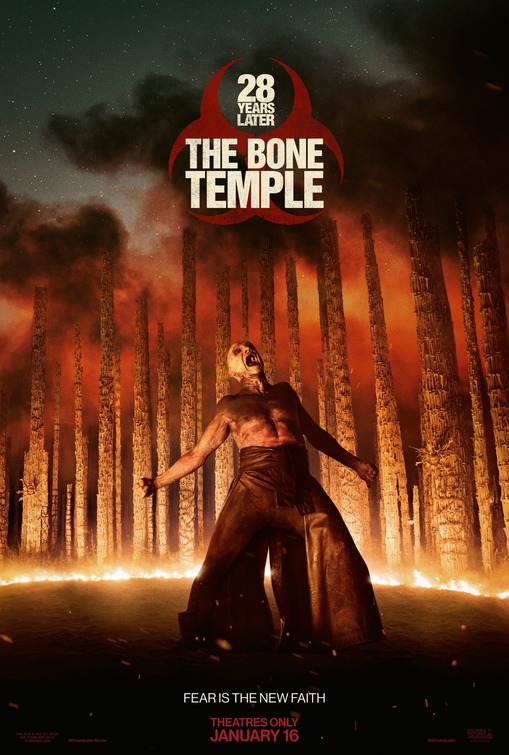
This sequel to last year’s 28 Years Later has arrived rapidly as it was shot back-to-back with the previous film. It has the same screenwriter in Alex Garland, but Nia DaCosta has taken up directorial duties. Having fled Lindisfarne, Spike (Alfie Williams) is inducted into Sir Jimmy Crystal’s (Jack O’Connell) gang of killers in a post-apocalyptic Britain ravaged by the Rage Virus. Meanwhile, Dr Ian Kelson (Ralph Fiennes) starts to make progress on finding a ‘cure’ for the alpha, Samson (Chi Lewis-Parry).
I enjoyed the previous instalment, though thought was a little overpraised and I was non-plussed by the ending when the Jimmys appeared. That choice makes more sense after seeing Bone Temple, and I think I would now appreciate a re-watch. However, this also feels like a more consistent film. Whilst there is not a single sequence to match Spike crossing the causeway with his Dad, there are a couple of particular highpoints. The flashiest one has Fiennes cavorting to Number of the Beast amidst pyrotechnics. A lower key one involves Kelson and Crystal talking about the pre virus times. Fiennes is superb at conveying his loneliness in that scene.
O’Connell is repulsive yet charismatic. His followers have an unthinking devotion to him, even when his lies become more and more blatant. In contrast, Kelson uses his scientific methods and is determined to find a vaccine. The parallels with the political scene right now are pretty obvious. Spike is a more peripheral figure this time, but I liked how he formed a brother-sister type relationship with the one member of the group with some humanity, Jimmy Ink, aka Kelli, played by the excellent Erin Kellyman.
The ending re-introduces a familiar and welcome character who will presumably be front and centre in the final part of the trilogy, which will also see the return of Danny Boyle.
Rating: 7.5 out of 10